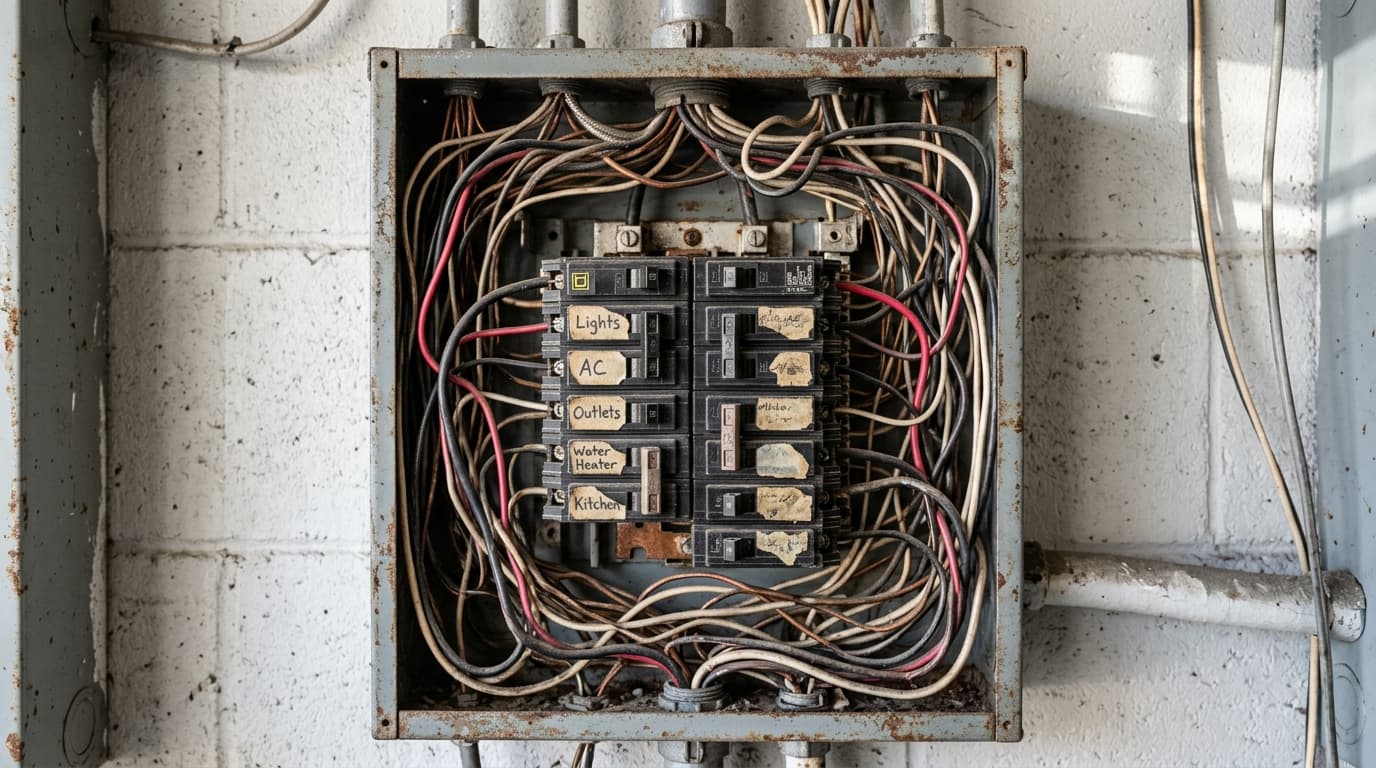
Warning Signs of Dangerous Old Wiring
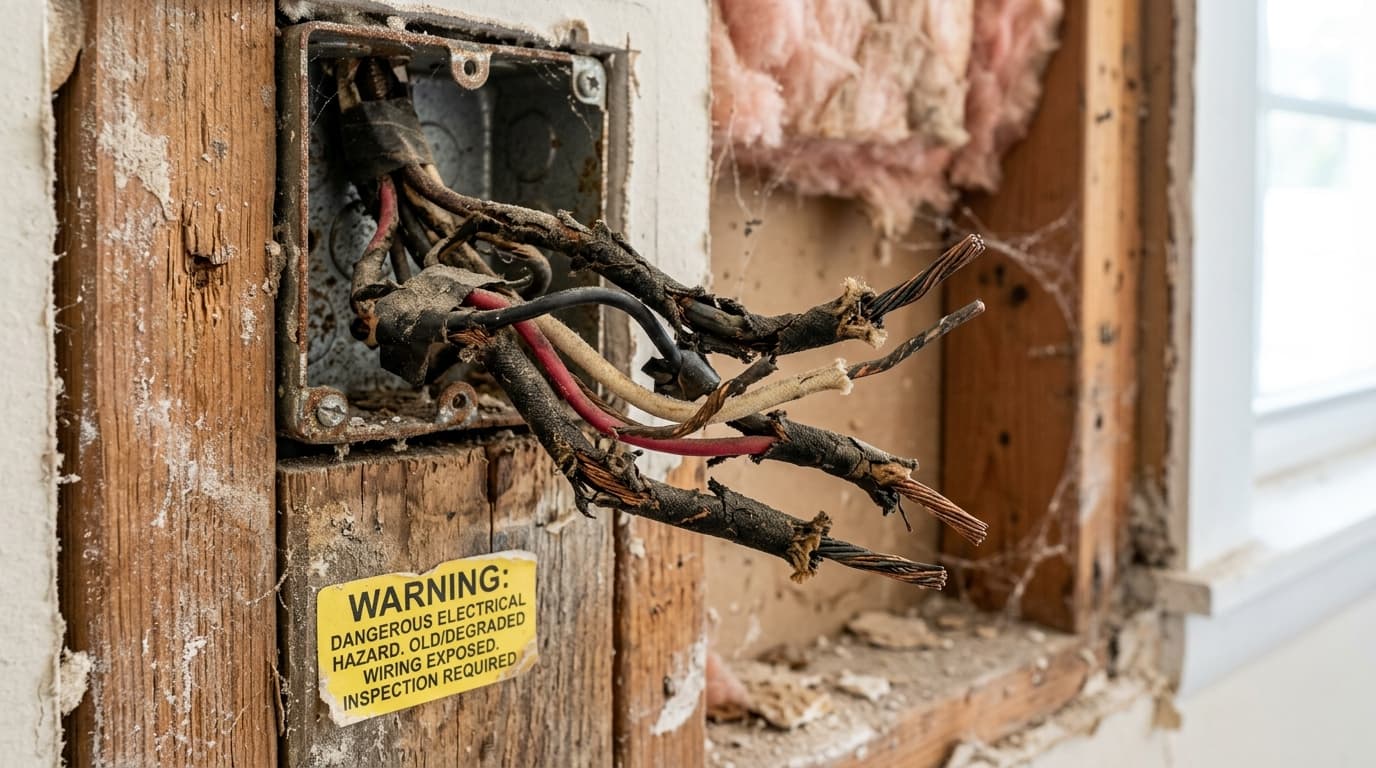
DeLand, Lake Helen, and several other Volusia County communities have a real stock of historic and mid-century homes — which means real character, and also, in many cases, wiring that's decades past its intended service life. Here's what to watch for.
Discolored or warm outlet and switch plates
A faint brown or black discoloration around an outlet or switch, or a plate that feels warm to the touch, usually points to a loose connection or overheating behind the wall. This is one of the more urgent signs on this list — it shouldn't wait.
A persistent burning smell with no obvious source
If you notice an intermittent burning or "hot plastic" smell and can't trace it to a specific appliance, treat it as an electrical issue until proven otherwise. Insulation breaking down from heat has a distinct smell, and it's worth cutting power to the affected area and calling an electrician rather than waiting to see if it happens again.
Flickering or dimming lights, especially under load
Occasional flickering during a storm is normal. Lights that consistently dim when the AC or a major appliance kicks on can indicate an overloaded circuit or a wiring connection that's degraded over time.
Frequent breaker trips or blown fuses
Like flickering lights, this is your electrical system telling you a circuit is working harder than it's designed to. In an older home, it can also be a sign that the wiring itself — not just the panel — needs attention.
Knob-and-tube wiring
If your home was built before the 1940s and hasn't been fully rewired, there's a real chance some original knob-and-tube wiring is still in place — recognizable by its ceramic knobs and tubes running through framing, with no ground wire. It's not inherently dangerous when left completely undisturbed and unmodified, but it wasn't designed for modern loads, lacks grounding, and is a common source of insurance complications.
Aluminum branch wiring
Common in homes built in the 1960s and 70s, aluminum wiring expands and contracts more than copper at connection points, which can loosen screws and connections over time — a slow-building fire risk that isn't always obvious from a casual look.
Two-prong (ungrounded) outlets throughout the home
If most of your outlets are still the older two-prong style, it's a strong signal your home hasn't been meaningfully updated since it was built. Beyond the inconvenience of not being able to plug in grounded (three-prong) devices safely, it usually means the rest of the electrical system is original as well.
What to do next
None of these signs mean you need to panic — but they do mean it's worth having a licensed electrician take a real look, rather than guessing. A full electrical safety inspection gives you a written report on exactly what's going on, and our rewiring service can address it in phases if a full rewire isn't in the immediate budget.
Request an estimate to get your older home evaluated by a licensed electrician.