Signs Your Electrical Panel Needs Upgrading
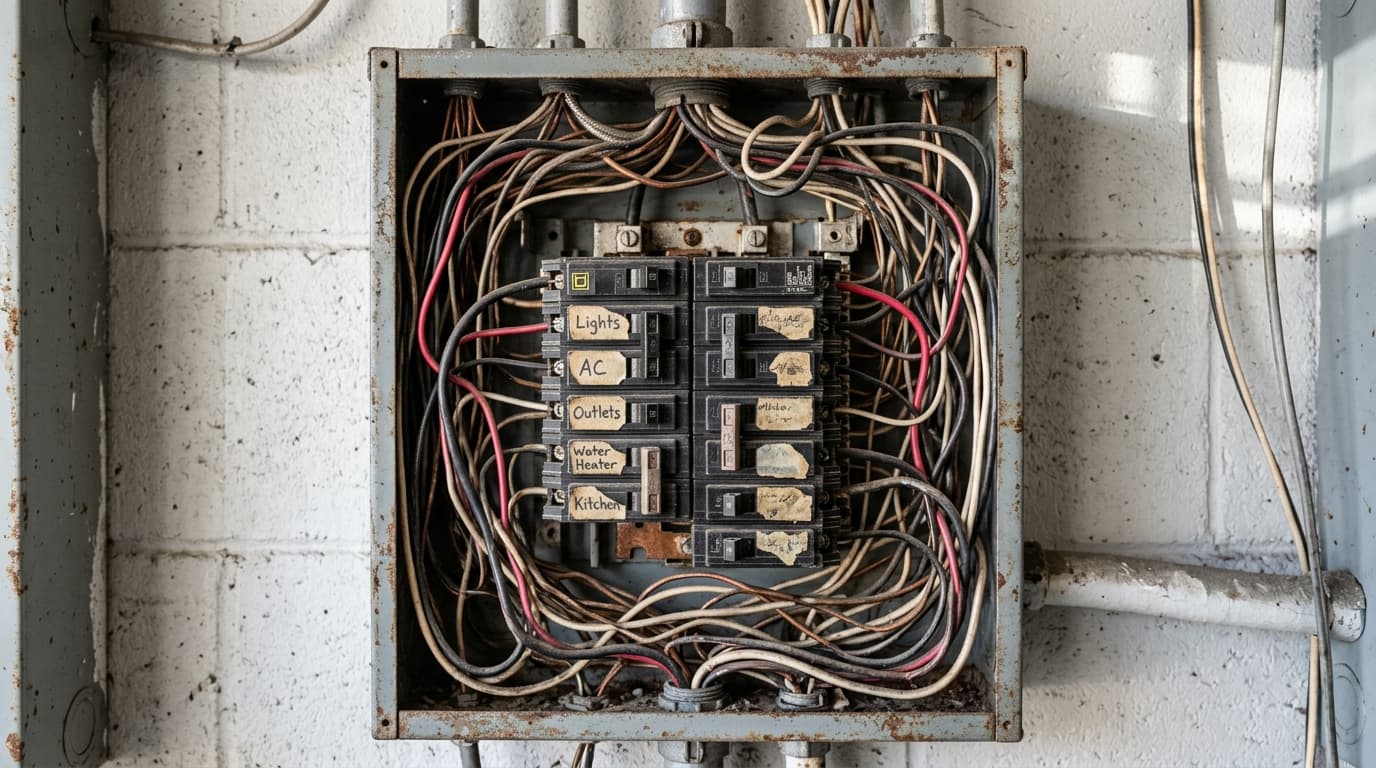
Your electrical panel is the single most important safety device in your home's electrical system — and it's also one of the easiest things to ignore, since most homeowners never open the panel door until something goes wrong. Here's what to watch for.
1. Breakers trip frequently
An occasional trip when you overload a circuit is normal. A breaker that trips repeatedly, especially under everyday use, is telling you the circuit — or the panel itself — can't keep up with your home's demand.
2. The panel is rated 100 amps or less
Homes built before the 1990s were often wired for 100-amp service, which was adequate for the appliance load of that era. Add central AC, a modern kitchen, a home office, and maybe an EV charger, and 100 amps gets tight fast. Most new installations today use 150 or 200-amp service for headroom.
3. You see the words "Federal Pacific" or "Zinsco" on the panel
Both brands were widely installed in Florida homes for decades, and both have a well-documented history of breakers that can fail to trip during an overload — the exact scenario a breaker exists to prevent. If either name is on your panel, it's worth having evaluated, even if nothing seems obviously wrong.
4. Breakers or outlets feel warm to the touch
Heat at a breaker, outlet, or switch plate is a sign of a loose connection or overloaded circuit, and it's one of the more common precursors to an electrical fire. This isn't a "wait and see" issue.
5. You're using a fuse box, not breakers
Fuse boxes were standard until the 1960s–70s and are now considered outdated by most electricians and insurers. Fuses can also be a fire risk when homeowners install an oversized fuse to stop it from blowing — which defeats its entire purpose.
6. You're planning a generator, EV charger, or major renovation
Even a perfectly functional older panel may not have room for a new 240V circuit. It's worth having your panel's actual capacity assessed before you commit to a generator or EV charger install, so there are no surprises mid-project.
What a panel upgrade actually involves
A typical residential panel upgrade includes a load assessment, permitting, coordination with your utility for the brief service disconnect, and a final inspection. Most jobs take about a day of on-site work, though your home will be without power for a portion of that day while the old panel comes out and the new one goes in.
If any of these signs sound familiar, it's worth getting a professional opinion before it becomes an emergency call. Request an estimate for a panel assessment, or read more about our panel upgrade service.