
Why Whole-Home Surge Protection Matters in Storm Country
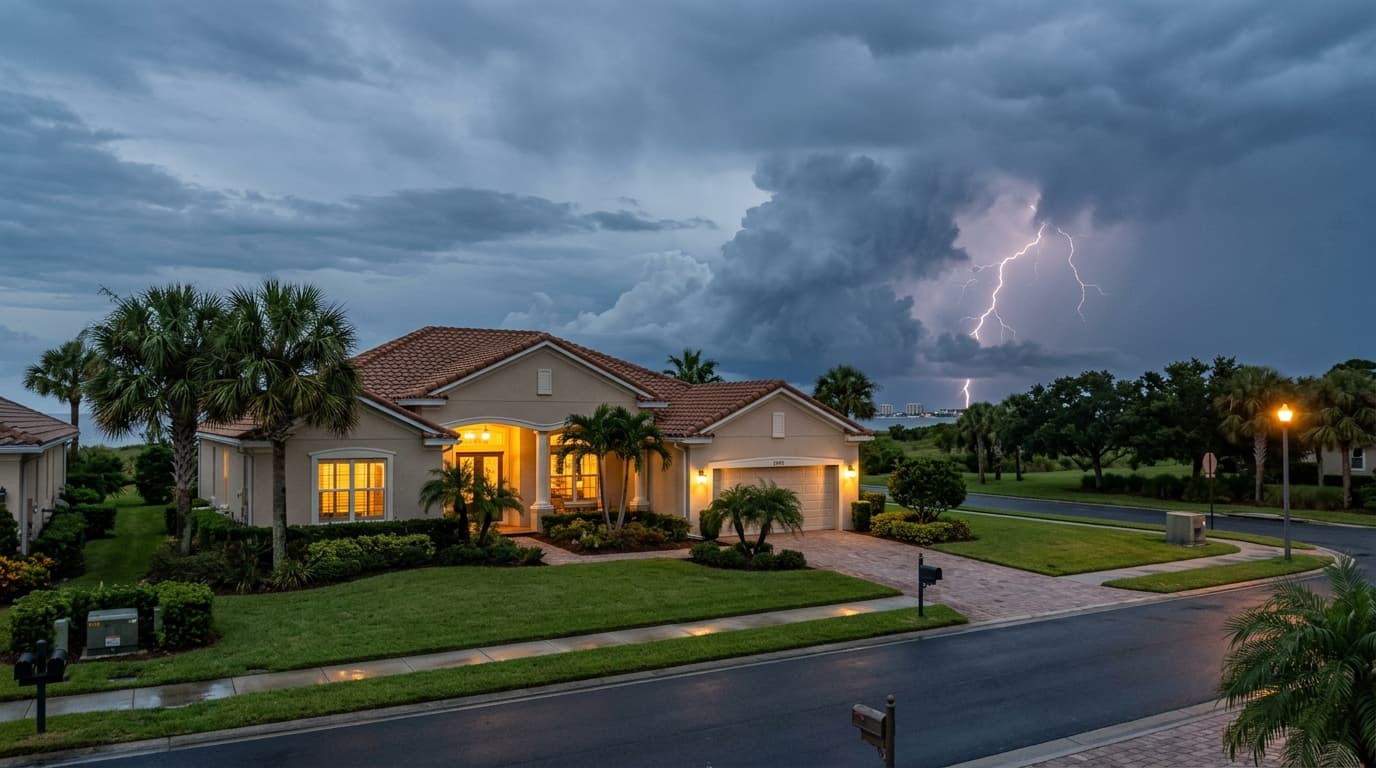
Florida is the lightning capital of the United States, and Volusia and Flagler County sit squarely in one of the most active corridors in the state. Between direct strikes, nearby strikes, and voltage spikes when utility power is restored after an outage, the electronics and appliances in a typical Florida home face more surge events over their lifetime than almost anywhere else in the country.
What actually causes a power surge?
A surge is a brief, sharp increase in voltage above what your home's electrical system is designed to handle. Common causes include:
- Direct or nearby lightning strikes, which can send a massive voltage spike through service lines
- Utility grid switching, including power being restored after an outage
- Large appliances cycling on and off, like AC compressors — smaller, more frequent surges that add cumulative wear
Why a power strip isn't enough
Point-of-use surge protectors (the kind built into power strips) can handle small, everyday surges reasonably well. But they have a limited capacity, and a large surge — the kind a nearby lightning strike causes — can overwhelm or simply bypass them entirely. By the time the surge reaches your TV or refrigerator, a power strip may have nothing left to give.
How whole-home surge protection works
A whole-home surge protective device (SPD) is installed directly at your main electrical panel, where it can intercept a surge before it spreads to any circuit in your house. Think of it as a first line of defense that protects everything downstream — your HVAC system's control board, your appliances, your home network equipment — rather than relying on protection at each individual outlet.
Whole-home and point-of-use protection aren't an either/or choice. Most electricians, including us, recommend both: the whole-home device handles large surges, and point-of-use protectors add a second layer for particularly sensitive electronics like home theater equipment or computers.
What's actually at risk without it
Modern homes have more surge-sensitive electronics than ever — not just TVs and computers, but HVAC control boards, smart thermostats, security systems, and increasingly, solar and EV charging equipment. A single surge event can damage several of these at once, and replacement costs add up quickly compared to the cost of prevention.
Grounding matters too
Surge protection only works as well as your home's grounding system allows. Part of a proper whole-home SPD installation includes verifying your electrical grounding meets current code — a step that's sometimes skipped by less thorough installations.
If your home doesn't have whole-home surge protection, or you're not sure, it's a relatively quick and affordable addition to an existing panel. Learn more about our whole-home surge protection service, or request an estimate to get it scheduled before the next storm rolls through.