Standby vs. Portable Generators for Florida Hurricane Season
Every June through November, Florida homeowners face the same question: what happens when the power goes out for days, not hours? The two most common answers — a portable generator or a whole-home standby system — solve the same problem in very different ways.
How a portable generator works
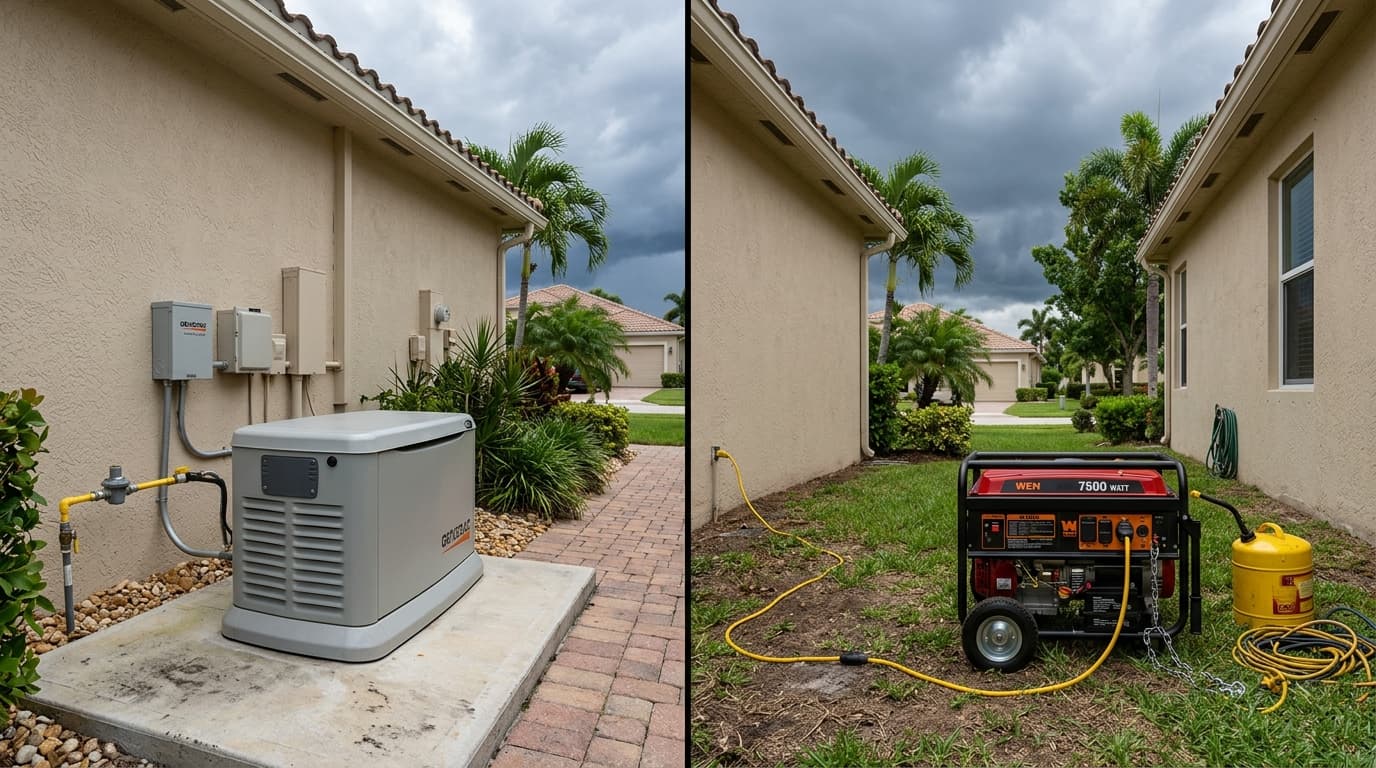
A portable generator is exactly what it sounds like: a wheeled or handheld unit you store in a garage or shed and roll out when you need it. When the power goes out, you manually start it, run extension cords to essential appliances (or connect it through a manual transfer switch/interlock), and refuel it every several hours depending on load.
Pros:
- Lower upfront cost
- No permanent installation
- Can be taken with you if you evacuate
Cons:
- Requires manual setup during a storm, often in bad weather
- Fuel storage and refueling become a real logistics problem during extended outages
- Limited output — usually not enough to run central AC
- Must be operated outdoors, away from windows and doors, to avoid carbon monoxide risk
How a standby generator works
A standby (or "automatic") generator is permanently installed outside your home, wired into your electrical panel through an automatic transfer switch, and connected to a natural gas or propane line. When the power goes out, it detects the outage, starts itself, and switches your home's power source — typically within 10–30 seconds — with no action required from you.
Pros:
- Fully automatic, even if you're not home
- Can power your whole house, including central AC, without extension cords
- No manual refueling — natural gas is essentially unlimited, and propane tanks are sized for extended runtime
- Runs a weekly self-test to confirm it's ready
Cons:
- Higher upfront cost, including installation and permitting
- Requires a suitable outdoor location with proper clearances
- Needs annual maintenance to stay reliable
Which one makes sense for your home?
If you're mostly concerned about keeping a refrigerator and a few lights running during occasional short outages, a portable generator with a properly installed interlock can be a reasonable, lower-cost option — as long as you're comfortable with the manual setup and fuel logistics every time.
If your priorities include central air conditioning (a real health and safety issue in a Florida summer outage), a well pump, medical equipment, or simply not wanting to think about it during a storm, a standby system is the more reliable long-term answer. It's also worth noting that many standby systems can be sized to cover either your whole home or just the essential circuits, which affects both the generator size and the installed cost.
Sizing matters either way
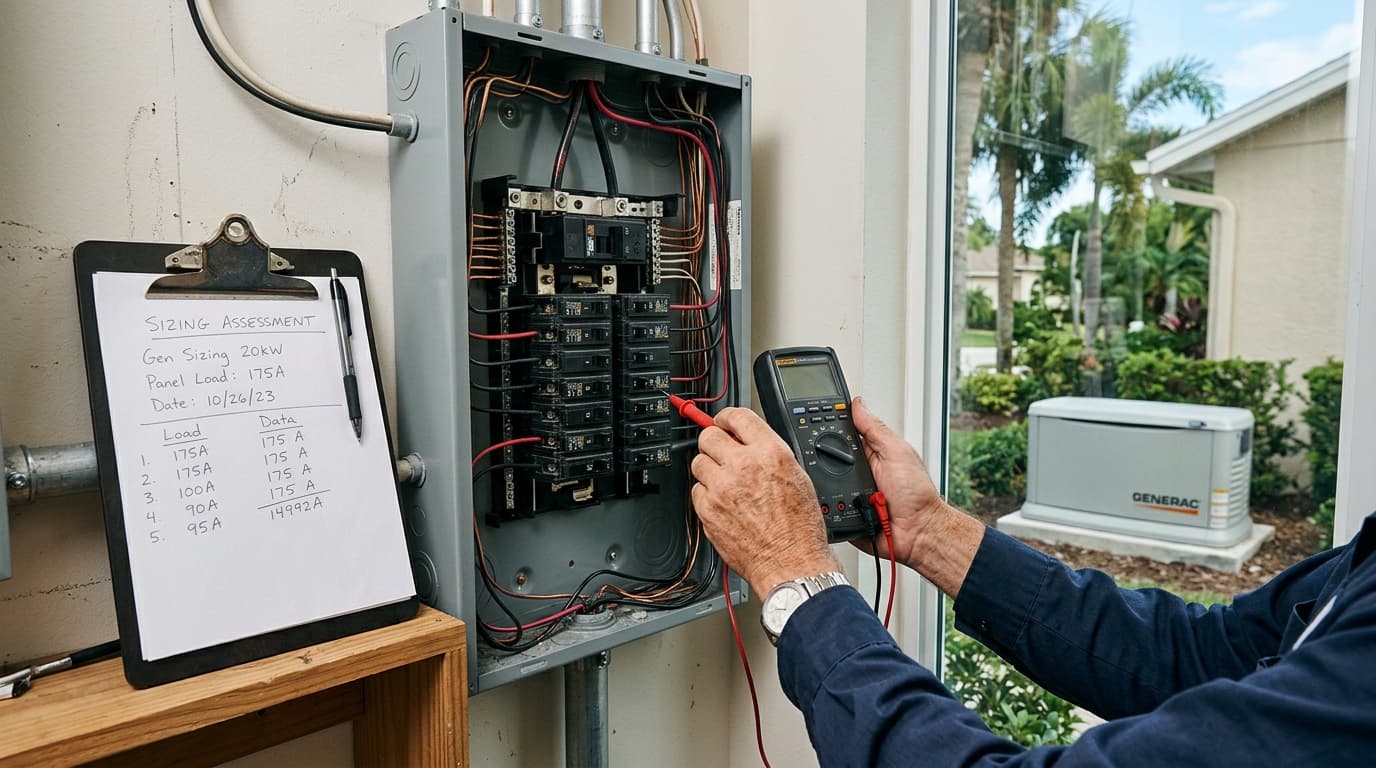
Whichever direction you go, an undersized generator is a common and avoidable mistake — it either can't start your AC's compressor or trips constantly under load. Our generator sizing calculator gives you a starting estimate based on what you want to power, and our team can confirm the exact size with an on-site load calculation.
Ready to talk through your options? Request an estimate and we'll walk you through standby and portable options sized for your actual home.